
BTS, NCT, and K-pop’s Social Language of Youth Empathy

K-pop is often described through spectacle: choreography, styling, fandom, visuals, and the speed of global circulation. But one reason groups like BTS and NCT reached young listeners so strongly is not only that they looked or sounded new. It is that their songs offered young people different emotional languages for surviving a hard social world.
BTS and NCT do this in different ways. BTS often makes youth pain speakable by naming pressure, unfairness, failure, and generational exhaustion. Their songs can feel like someone is finally saying aloud what young people are usually told to hide. NCT, especially across NCT U, NCT 127, and NCT Dream, often turns empathy into connection, shared motion, and rebellious style. Their songs do not always sound soft, but they often redirect hard sounds away from cruelty and toward youth self-recognition.
That difference matters. Empathy in pop music is not only a sweet ballad telling us that everything will be okay. Sometimes empathy sounds like anger. Sometimes it sounds like permission to fail. Sometimes it sounds like a hand held beside you. And sometimes, surprisingly, it sounds like trap beats, pink punk styling, and young people shouting themselves out of the frame society built for them.
BTS made youth pain speakable; NCT made youth rebellion stylish without making it cruel.
The Core Comparison
A useful way to frame the contrast is this: BTS often begins from social injury, while NCT often begins from relational or stylistic reorientation. Both produce empathy, but they do so through different emotional routes.
| Artist / Song | Main emotional mode | Social meaning |
| BTS, “Baepsae” | Generational anger | Youth exhaustion becomes structural, not personal failure. |
| BTS, “FIRE” | Permission and release | Losing is not treated as moral failure. |
| NCT U, “Without U” | Companionship | Survival becomes possible through connection. |
| NCT 127, “Cherry Bomb” | Hard sound, gender-crossing style | Power is detached from woman-bashing and redirected into rebellion. |
| NCT Dream, “GO” | Youth refusal | Youth are urged not to live inside inherited frames. |
BTS’s “Baepsae”: When Empathy Becomes Generational Anger
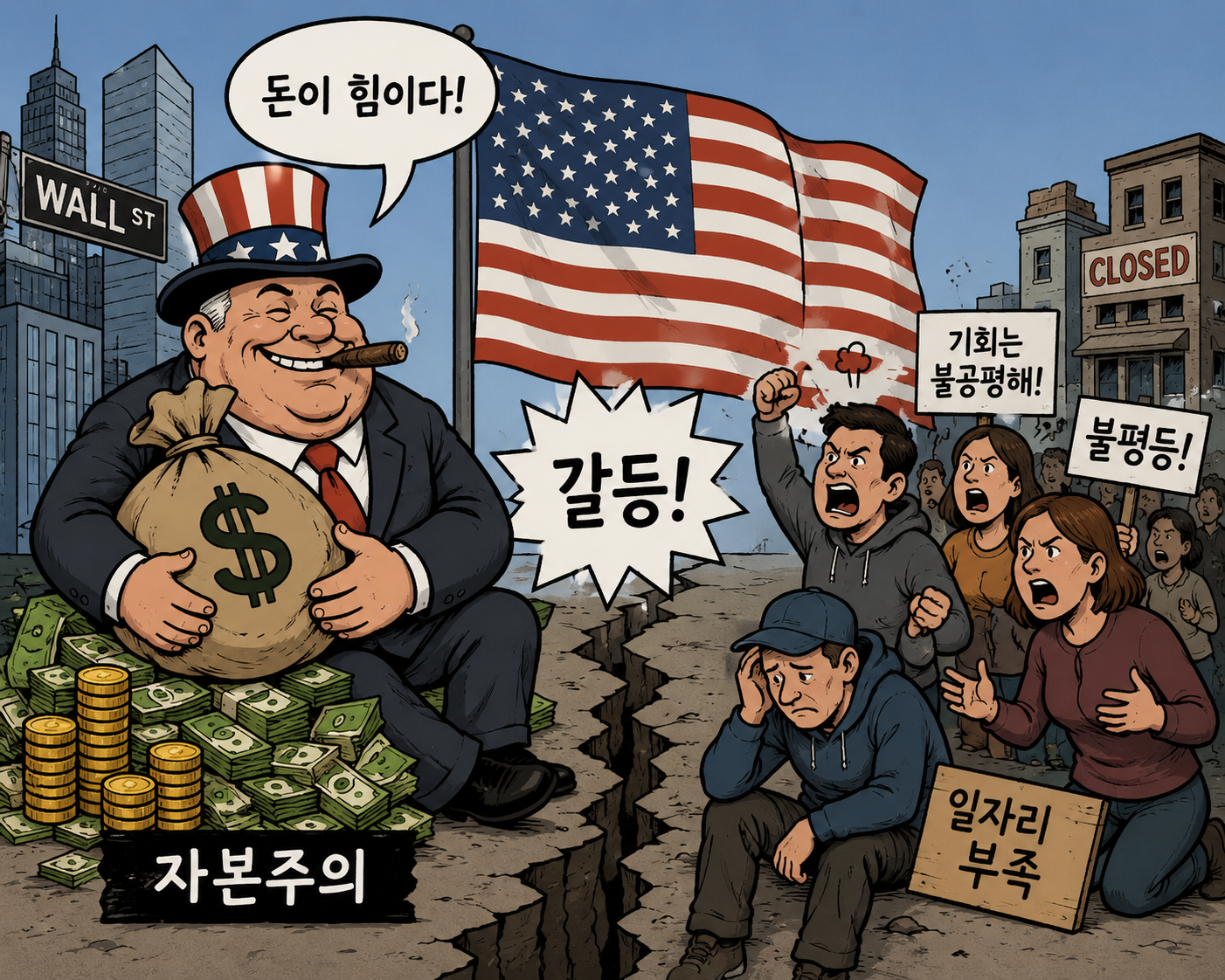
One reason BTS resonated so deeply with young listeners was that their lyrics did not treat youth pain as a private weakness. In “Baepsae,” BTS gives language to a feeling many young people know well: the frustration of being told to work harder by people who benefited from a very different world.
The song uses the contrast between the baepsae and the hwangsae to criticize generational inequality. In Korean, there is a saying that if a small bird tries to follow a stork, its legs will tear apart. BTS turns this image into a social critique. The hwangsae can be read as the older or more privileged generation: people who moved through life during a time of greater economic growth, then looked back at younger people and accused them of lacking effort. But for the younger generation, the problem is not simply laziness. The problem is that the race itself has changed.
This is why the song’s anger feels so relatable. BTS is not only complaining about school, bosses, or the media. They are naming a whole social atmosphere where young people are constantly judged: by teachers, employers, journalists, parents, and public opinion. The phrase N-po generation captures this pressure especially well. It refers to young people who have had to give up not only romance or marriage, but also housing, stable jobs, children, dreams, and sometimes even hope itself. When society says “try harder,” BTS answers with a deeper question: harder than what, harder than whom, and under what conditions?
What makes “Baepsae” powerful is that it transforms shame into shared recognition. A listener who feels like a failure can hear the song and realize that their exhaustion may not be individual weakness. It may be the logical result of unequal structures. That realization is a form of empathy. It does not comfort young people by saying everything will be fine. Instead, it tells them that their frustration makes sense.
방탄소년단(BTS) – ‘뱁새(Baepsae)’ ㅣ @뮤직뱅크 Music Bank 20160513
This is also why BTS’s youth message traveled beyond Korea. Even listeners who did not know the exact Korean social context could recognize the emotional structure: older generations blaming younger people for economic insecurity, institutions demanding endless effort, and youth being told to smile through precarity. “Baepsae” became globally relatable because it connected personal frustration to a social structure. It made young people feel seen, not as isolated failures, but as a generation being asked to run with torn legs.
BTS’s “FIRE”: The Radical Permission to Lose
If “Baepsae” turns youth frustration into social critique, “FIRE” turns that frustration into release. On the surface, “FIRE” sounds like a loud, explosive party song. Its energy is wild, almost reckless. But hidden inside that intensity is one of BTS’s most consoling messages to young people: you do not have to live perfectly.
The song’s message can be understood as a refusal of the success-obsessed world surrounding youth. BTS tells listeners to live in their own way because, after all, it is their life. More importantly, the song gives permission to stop trying so desperately. It suggests that defeat does not destroy a person’s worth.
This matters because young people are often raised inside a culture where losing feels like moral failure. In school, work, beauty, romance, money, and even dreams, youth are constantly ranked. They are told to improve themselves, prove themselves, brand themselves, and never fall behind. In that kind of society, saying that losing is okay becomes more than comfort. It becomes resistance.
What makes “FIRE” socially empathetic is that it speaks beyond gender. The song does not console only young men or young women. It addresses a broader youth generation trapped in competition and exhaustion. Whether the listener is a student who failed an exam, a job seeker rejected again, a young woman tired of being judged, or a young man ashamed of not becoming successful fast enough, the song offers the same emotional release: your worth is not destroyed by defeat.
This is one reason BTS’s message resonated globally. Many fans did not need to know every detail of Korean youth culture to understand the pressure of having to win. “FIRE” gave listeners a fantasy of burning down that pressure, even if only for three minutes. It allowed young people to dance, shout, and breathe inside a world that usually asks them to endure silently.
In this sense, “FIRE” is not simply a hype song. It is a youth anthem of imperfect survival. BTS does not simply promise that listeners will win. They offer something more compassionate: even if you lose, you are still allowed to live.
NCT U’s “Without U”: Empathy as Connection
NCT U’s “Without U,” released relatively early in NCT’s career, offers a different but equally important form of youth empathy. Unlike BTS’s “Baepsae,” which points toward social unfairness, or “FIRE,” which gives young people permission to lose, “Without U” focuses on the emotional need for connection. Its message is simple but powerful: life is something we endure, but it becomes more bearable when we are not alone.
The song understands youth not only as a time of ambition, but also as a time of loneliness. Young people are often told to chase dreams as individuals: build your own career, manage your own emotions, fix your own weaknesses, and survive your own sadness. “Without U” gently resists that isolation. It suggests that courage does not always come from self-confidence. Sometimes, the courage to keep living comes from another person’s warmth.
This is where the song becomes socially meaningful. It does not present empathy as a grand political slogan. Instead, empathy appears as someone walking beside you, lending a shoulder, holding your hand, or sharing sadness so that it becomes less heavy. The repeated image of connection matters deeply for NCT’s world, because NCT as a group is built around ideas of expansion, linkage, and relational identity. In “Without U,” that concept becomes emotional rather than only structural: people survive by becoming connected.
The song’s dream imagery is especially moving. Rather than saying my dream is mine alone, “Without U” imagines dreams existing beside one another. My dream can be near your dream. Your dream can be near mine. This is a softer and more communal idea of youth aspiration. It does not erase personal ambition, but it refuses the idea that young people must compete in total loneliness.
In this sense, “Without U” contributes to youth empathy in a quieter way than BTS’s more confrontational songs. It does not shout against the older generation or burn down the pressure to win. Instead, it tells listeners that needing someone is not weakness. For young fans, especially those struggling silently, that message can feel deeply consoling. The song makes companionship itself feel like survival.
NCT’s Hard Sound, Soft Social Direction: “Cherry Bomb” and “GO”
NCT complicates the idea that empathetic youth music must always sound gentle. With songs like NCT 127’s “Cherry Bomb” and NCT Dream’s “GO,” the sound is hard, masculine, expensive, and almost intimidating. These tracks use trap-influenced beats, sharp bass, and a cool, chic aggression that could easily attract male listeners who might normally dismiss idol music as too soft or too feminine. But what is striking is that NCT does not simply use this sound to repeat the most predictable forms of masculine boasting.
In much mainstream hip-hop and trap-influenced pop, hardness often comes with familiar lyrical habits: domination, wealth-flexing, sexual conquest, or the performance of being untouchable. NCT borrows the sonic power of that world, but redirects it. The beat may sound aggressive, but the message is not built around humiliating women or proving masculinity through misogyny. Instead, NCT’s aggression becomes stylized rebellion, youth energy, and refusal.
“Cherry Bomb” is especially interesting because its toughness is visually interrupted by pink punk styling. The song can be read as a strange and exciting collision: hip-hop hardness, idol precision, punk attitude, and a feminine-coded explosion of color. If we read it alongside the legacy of girl-band rebellion and images such as The Runaways, “Cherry Bomb” becomes more than a performance of male coolness. It feels like a gender-crossing experiment: a boy group occupying a hard sonic space while also using pink, punk, and theatrical styling in ways that disturb ordinary hip-hop masculinity.
This is where NCT’s empathy becomes more subtle. They are not simply saying, in a direct lyrical way, that they understand the listener’s pain. Instead, NCT creates a space where young people can feel powerful without having to become cruel. The listener can borrow the song’s confidence, attitude, and explosive energy without needing to participate in woman-hating or empty domination. That matters socially because pop music teaches young people not only what to feel, but also what kinds of power are available to them.
NCT Dream’s “GO” makes this youth politics even clearer. The song challenges the feeling of being trapped inside repeated stories, social scripts, and pre-written futures. Rather than accepting the same old messages, the song pushes young people to question whether they are living thoughtlessly, being swept along, and losing something real inside the frame society has built for them. Its rebellion is not only sonic. It is directed at conformity.
This is especially meaningful because NCT Dream were young performers speaking to young listeners. “GO” does not romanticize youth as pure innocence. Instead, it treats youth as a moment of pressure, confusion, and possible awakening. The repeated command to move forward is not only about speed. It is about refusing to remain locked inside someone else’s design. The song tells young people that if they live only by borrowed expectations, they may later regret losing their own truth.
In that sense, “GO” can be heard as a critique of both social conformity and formulaic popular masculinity. It uses hard, fashionable sounds associated with global hip-hop, but its target is not women, weakness, or vulnerability. Its target is the false life: the life lived without thought, the life trapped in a frame, the life that looks normal from the outside but feels empty inside.
Why This Matters: Empathy Beyond Softness
Putting BTS and NCT together helps us see that youth empathy in K-pop is not one single mood. It is not only the ballad, the confession, or the soft comfort song. It can also be anger, noise, speed, fashion, humor, refusal, and collective movement.
BTS’s empathy is powerful because it often begins by refusing to blame young people for their own suffering. In “Baepsae,” young listeners are not lazy failures; they are people forced to compete under unequal conditions. In “FIRE,” they are not morally ruined because they lose; they are still allowed to live, breathe, dance, and choose their own way. BTS’s emotional force comes from naming what society often individualizes: exhaustion, shame, precarity, and defeat.
NCT’s empathy works differently. “Without U” says that survival is relational: someone beside you can become the reason you keep going. “Cherry Bomb” and “GO” suggest that young people can claim hardness, style, and rebellion without turning them into misogyny or empty domination. NCT’s social contribution is not always a direct consolation. Sometimes it is the creation of a new mood: hard but not cruel, rebellious but not woman-hating, youthful but not naive.
This distinction is important for thinking about K-pop’s global resonance. Many fans around the world did not simply attach themselves to Korean idols because of perfect visuals or catchy choreography. They found languages for their own contradictions. They could be angry but still caring. They could feel defeated but not worthless. They could want connection without feeling weak. They could enjoy hard sounds without accepting the gender politics often attached to those sounds.
In this way, BTS and NCT both helped make empathy social. They did not only say, “I feel your pain.” They asked what kind of world produces that pain, what kind of music can carry it, and what kind of community might make it survivable.
Conclusion: From Being Seen to Moving Together
The emotional power of BTS and NCT lies in how they make youth feel less alone. BTS often begins with recognition: your anger is not irrational, your failure is not final, your exhaustion is not simply your fault. NCT often extends that recognition into relation and style: take my hand, walk beside me, move beyond the frame, and claim power without losing empathy.
Together, these songs show how K-pop can become more than entertainment. It can become a social language for young people trying to survive systems that rank them, shame them, isolate them, and tell them to keep smiling. The most important thing these songs offer is not a simple solution. They offer a shared feeling: someone else understands that life is hard, that losing hurts, that loneliness is real, and that rebellion does not have to become cruelty.
That is why the empathy in BTS and NCT matters. It is personal enough for fans to feel it in their own lives, but culturally critical enough to reveal the pressures shaping those lives. Their music does not remove the burden from young people. But it changes how that burden is heard. It turns private shame into public recognition, individual survival into companionship, and hard sound into a new possibility for care.
Note: This draft intentionally paraphrases most lyric content and uses only brief lyric fragments, so the argument can remain publishable while preserving the songs’ social meanings.

Leave a Reply