Lana Del Rey / Rihanna / Iggy Azalea / Green Day / Panic! At the Disco / MARINA AND THE DIAMONDS


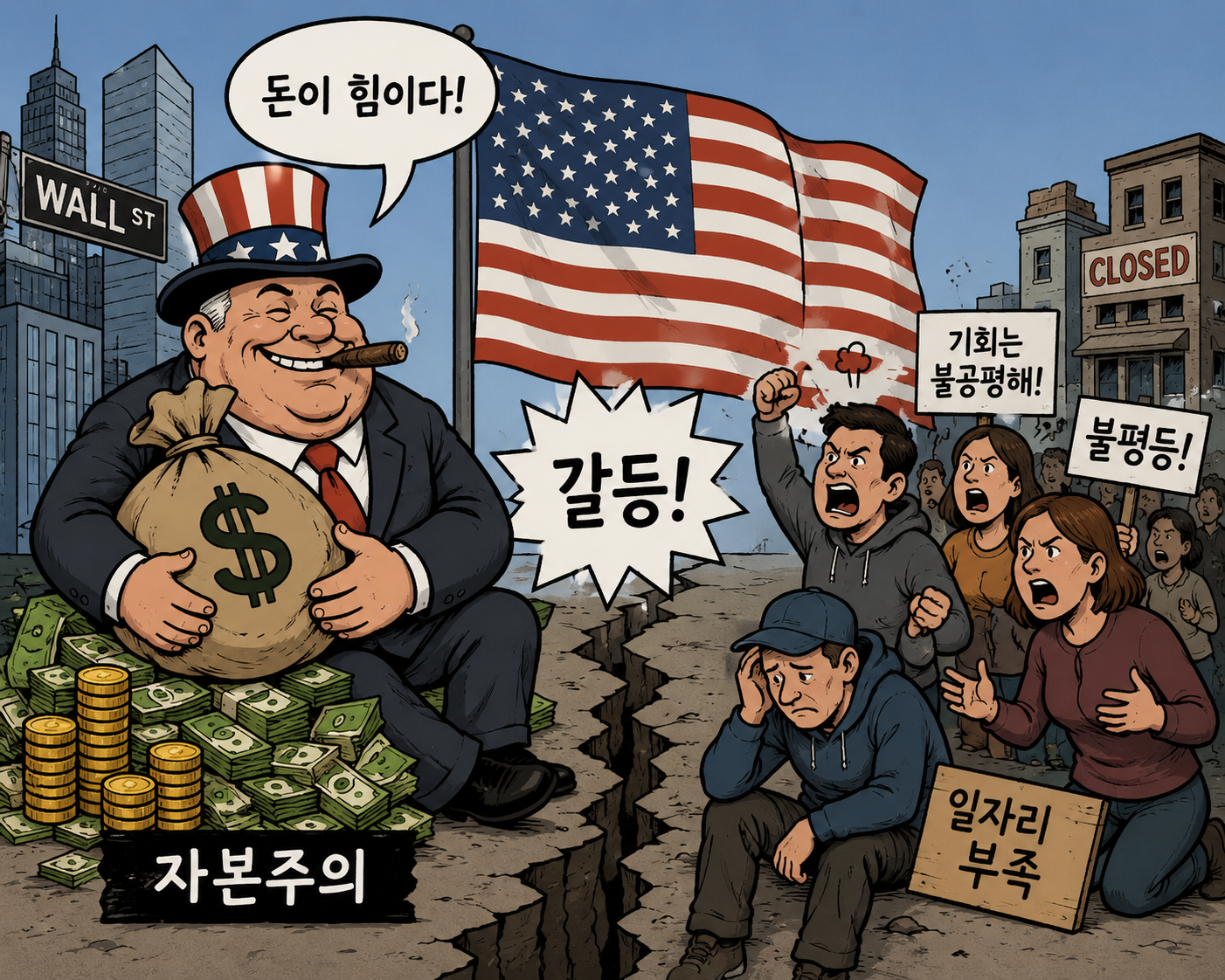
Lana Del Rey once condensed an entire civilization into six words: “Money is the reason we exist.”
The line sounds obscene because it refuses to pretend. It does not dress capitalism in the language of ambition, independence, merit, romance, or family responsibility. It strips the room bare. No curtains. No scented candles. No tasteful piano chords. Just the altar and the god sitting on top of it.
I thought about that line again during a blind date in Seoul.
Not because the date was particularly cruel. In fact, that was what made it worse. The conversation was calm, polite, almost administrative. Somewhere between the coffee order and the forced smile, the questions began to line up like little customs officers at the border of intimacy.
Where do you work?
Is it stable?
Do you rent or own?
What neighborhood?
What do your parents do?
Do they own property?
How much do you think you can realistically save?
Nobody said, “Money is the reason we exist.” That would have been vulgar. Instead, the sentence appeared in pieces, disguised as prudence, maturity, realism. Romance had been replaced by due diligence. I was not being met. I was being appraised.
And the strangest part was that this did not feel like a uniquely Korean failure, even though Seoul has its own intense rituals of class measurement. It felt imported from a much larger machine. The American dream, after all, was never only American. It became a global operating system. It taught the world to call hierarchy “aspiration,” exhaustion “hustle,” and financial interrogation “knowing what you want.”
Pop music has always understood this better than economics textbooks. A pop song has only three or four minutes to seduce you, so it cannot hide its theology for long. Beneath the glitter, hooks, choreography, and rebellion poses, American pop keeps returning to the same question: what does capitalism do to the human soul?
Not what does it produce. Not how much does it grow. Not whether it innovates, scales, disrupts, or delivers shareholder value. The real question is simpler and more frightening:
What kind of person must you become to survive inside it?
The answer unfolds almost like a five-act tragedy.
First, the system exploits the worker.
Then the individual must exploit herself.
Then the media teaches her not to notice.
Then success turns her into a puppet.
Finally, everyone learns to appraise everyone else.
The love song becomes a balance sheet.
The dream becomes a factory.
The self becomes a brand with a pulse.
Act 1: Rihanna’s “American Oxygen” and the Breath of the Empire
Rihanna’s “American Oxygen” presents the American dream as something inhaled before it is understood. Oxygen is the perfect metaphor because nobody votes for oxygen. Nobody sits down and says, “I have carefully considered the ideological implications of breathing.” You simply do it. You take it in because the body demands it.
That is how capitalism wants to function: not as a political system, but as atmosphere.
In the song, America is not only a country. It is a promise that has been pumped into the lungs of workers, immigrants, athletes, soldiers, entrepreneurs, and children staring at impossible skylines. Breathe deeply enough, and maybe you can become somebody. Work hard enough, and maybe the empire will notice you. Sweat long enough, and maybe the nickel becomes a dollar, the dollar becomes a house, the house becomes a dynasty, and the dynasty becomes proof that the suffering was meaningful.
This is the first trick of the American dream: it transforms exploitation into origin story.
The worker does not merely labor. The worker “builds.” The exhausted body is not being drained. It is “chasing something.” Poverty is not structural. It is the first chapter of a motivational speech. Hunger is not a policy failure. It is cinematic lighting before the triumphant chorus.
“American Oxygen” understands that the dream is both beautiful and violent. It is beautiful because people really do cross oceans, borders, languages, and humiliations for the chance to breathe freer air. It is violent because that same dream often requires them to offer their bodies as fuel for someone else’s empire.
This is capitalism’s favorite bargain: it asks the poor to pay in advance for a future that may never arrive.
The brilliance of the phrase “American oxygen” is that oxygen is necessary, but it can also be contaminated. If the air itself carries ideology, then survival and submission become difficult to separate. You breathe in ambition. You breathe in competition. You breathe in the idea that your exhaustion is not evidence of injustice, but evidence of your seriousness.
The system does not need to whip you if it can convince you that fatigue is a personality trait.
That is why the American dream is so durable. It does not simply say, “Work.” It says, “Work, and one day this will all become yours.” It turns the exploited worker into a shareholder of fantasy. You may not own the factory, the platform, the label, the real estate, or the algorithm, but you are allowed to own the story. And sometimes the story is enough to keep you moving.
This is the systematic exploitation at the heart of the dream: capitalism sells the worker a myth in exchange for the worker’s body.
The empire is not built by billionaires alone. It is built by people sweating behind counters, in warehouses, on farms, in cars, in kitchens, in hospitals, in call centers, in nail salons, in delivery routes, in rented rooms, and in invisible domestic spaces. But once the empire stands tall enough, it photographs itself from the penthouse and calls the view “freedom.”
Act 2: Iggy Azalea’s “Work” and the Price of Entering the Room
If “American Oxygen” shows the system from above, Iggy Azalea’s “Work” drags the camera down to the floor.
Not the symbolic floor. The actual floor. The one somebody has to scrub.
“Work” is not polished aspiration. It is aspiration with dirt under its nails. It does not float in the grand vocabulary of national destiny. It speaks in the harsher grammar of rent, movement, humiliation, and bodily endurance. This is the American dream after it has passed through the immigrant underclass: less flag, more mop bucket.
The song’s emotional force comes from its refusal to make ambition look elegant. There is no soft-focus montage of “believing in yourself.” There is a body doing whatever must be done to get closer to the room where decisions are made. Scrubbing floors is not a metaphor here. It is the material entry fee.
That distinction matters.
Capitalism loves to aestheticize struggle after the fact. Once someone becomes rich or famous, their suffering is repackaged as inspirational content. The ugly years are edited into a heroic prelude. The hunger becomes charming. The shame becomes character development. The low-wage job becomes a cute anecdote on a talk show couch.
But while you are inside that life, nothing is cute.
You are not “building resilience.” You are tired.
You are not “learning discipline.” You are underpaid.
You are not “paying your dues.” You are paying for the right to be considered human in a room that already decided your worth before you arrived.
“Work” captures the personal exploitation that systematic exploitation produces. At some point, the worker internalizes the machine. She becomes her own manager, her own disciplinarian, her own motivational tyrant. She learns to treat her body as a startup. Sleep becomes inefficiency. Pain becomes data. Loneliness becomes the cost of focus.
This is where capitalism becomes intimate. The boss no longer has to stand over you, because the boss has moved inside your head.
For immigrants, especially, this pressure sharpens into a double command: be grateful and be exceptional. Grateful, because the host country has supposedly offered opportunity. Exceptional, because ordinary survival is treated as failure. The immigrant cannot merely live. She must justify the migration. She must turn sacrifice into proof.
This is why the phrase “buying a ticket into the room” feels so exact. The room is not just a workplace or an industry. It is legitimacy itself. It is the place where accents are softened, origins are rebranded, and the raw facts of poverty are converted into a marketable backstory.
But here is the cruelty: by the time you finally get into the room, you may have had to become someone the room can recognize.
The scrubbed floor does not disappear. It becomes part of the shine.
Act 3: Green Day’s “American Idiot” and the Hysteria Machine
If capitalism only exploited people, people might eventually revolt. So the system needs more than work. It needs noise.
Green Day’s “American Idiot” attacks the media machinery that converts citizens into spectators of their own dispossession. The song is furious because it understands that propaganda in modern consumer culture does not always look like solemn government posters or stiff patriotic speeches. Sometimes it looks like entertainment. Sometimes it looks like a breaking-news banner. Sometimes it looks like a lifestyle segment, a product launch, a culture-war panic, a celebrity scandal, a war montage, a patriotic commercial, a shopping holiday.
The goal is not only to tell people what to think. The deeper goal is to prevent thought from gathering enough silence to become dangerous.
“Hysteria” is the perfect word for this atmosphere. A hysterical society is always reacting and rarely organizing. It jumps from outrage to outrage, from fear to fear, from enemy to enemy. The worker who might have asked, “Why am I exhausted?” is instead invited to ask, “Who should I hate today?”
This is the political genius of distraction. It does not abolish suffering. It gives suffering a costume.
Your wages are stagnant, but look over there: a moral panic.
Your rent is impossible, but look over there: a new enemy.
Your healthcare is unaffordable, but look over there: a flag large enough to cover the wound.
Your time has been stolen, but look over there: a flash sale.
“American Idiot” is not merely anti-media. It is anti-hypnosis. It recognizes that the working class is kept obedient not only through poverty, but through narrative management. A person who is constantly afraid, entertained, and morally overstimulated has little energy left for structural analysis.
Consumer capitalism does not require citizens. It prefers audiences.
An audience can boo.
An audience can cheer.
An audience can buy merchandise.
But an audience does not usually seize the theater.
This is the systemic propaganda that protects the grind. The worker is told that the problem is personal discipline, foreign competition, corrupt elites, lazy neighbors, immigrants, liberals, conservatives, bad taste, bad schools, bad parents, bad vibes, bad luck. Anything except the structure itself.
And while everyone argues inside the maze, the owners sell tickets to the maze.
Green Day’s rage still feels alive because the machinery has only become more efficient. The television screen became the smartphone. The news cycle became the feed. The feed became the nervous system. Now propaganda does not merely enter the home. It wakes up in bed with us, glowing beside the pillow.
The modern worker is not only exploited during working hours. Even leisure has been colonized. Rest becomes scrolling. Scrolling becomes advertising. Advertising becomes desire. Desire becomes debt. Debt becomes more work.
The circle closes so smoothly that it almost feels natural.
Almost.
Act 4: Panic! At The Disco’s “Hey Look Ma, I Made It” and the Puppet of Success
By the time we reach Panic! At The Disco’s “Hey Look Ma, I Made It,” capitalism has performed its most elegant trick: it has turned exploitation into applause.
The song sounds bright, theatrical, almost manic, but underneath that glitter is something grotesque. Its central image is not simply fame. It is puppetry. The successful individual appears animated, celebrated, adored, but the movement is not entirely his own. Strings descend from somewhere above: the label, the market, the algorithm, the audience, the family, the industry, the invisible shareholders of the self.
Success becomes performance under corporate control.
The title’s address to “Ma” is crucial. Capitalism rarely motivates us through greed alone. Greed is too crude, too lonely. More often, it speaks through love. It borrows the voices of parents, ancestors, hometowns, teachers, and younger selves. It says: make them proud. Prove the sacrifice was worth it. Redeem the family story. Turn yourself into evidence.
This is where the American dream becomes filial theater.
“Look, Ma, I made it” sounds triumphant, but also childlike. The adult performer is still seeking permission, still holding up the trophy, still hoping the spectacle of success will heal the private wound. The corporation understands this. The market understands this. It knows that people will endure almost anything if they can rename it devotion.
A puppet who believes the strings are family obligations will dance harder.
This act reveals the psychological trap of capitalism: even victory does not free you. It merely changes the shape of your cage. Before success, you are exploited because you are powerless. After success, you are exploited because you are valuable. Your face, voice, trauma, style, body, relationships, breakdowns, and recovery arcs all become monetizable.
You become a product that must keep insisting it is a person.
The manic energy of “Hey Look Ma, I Made It” captures this contradiction. The performance is celebratory, but too bright. Too lacquered. Too frantic. It has the smile of someone who cannot stop smiling without violating the contract.
This is the terror of making it: once your identity becomes profitable, authenticity itself becomes a department.
The puppet doll is not a failure of capitalism. The puppet doll is one of its masterpieces. It is the worker upgraded into spectacle. No longer merely laboring behind the scenes, the successful subject now sells the appearance of freedom. Fans call it inspiration. Executives call it brand alignment. Parents call it proof.
But somewhere inside the costume, a person keeps asking whether being seen is the same as being alive.
Conclusion: MARINA AND THE DIAMONDS’ “Power & Control” and the Cold Equality of the Marketplace
MARINA’s “Power & Control” brings the cycle into its most intimate and modern form: the marketplace enters love.
By this stage, capitalism is no longer just a system outside us. It has become a style of relating. Everyone evaluates. Everyone compares. Everyone negotiates. Everyone protects their leverage. Everyone learns to ask, consciously or not: what can this person do for me?
This is where my Seoul blind date returns.
The asset interrogation was not an exception to romance. It was romance after capitalism had finished renovating it. The table between us might as well have been a spreadsheet. Affection had not disappeared, exactly, but it had been forced to pass through risk assessment first.
And here, the gender politics become especially strange.
For centuries, women were appraised under patriarchal systems as bodies, brides, wombs, ornaments, caretakers, and class-signaling devices. Their beauty, chastity, family background, obedience, and reproductive potential were treated as assets in a marriage economy. Men looked. Men selected. Men calculated.
But in modern capitalist dating, especially among people who have gained education, income, and professional status, the gaze can flip. Women can appraise men with the same coldness once reserved for them. Salary, property, family wealth, height, school, job title, neighborhood, social network, emotional manageability: all become searchable fields in the human inventory.
This reversal can look like empowerment. In one limited sense, it is. A woman who can choose is freer than a woman who is chosen. A woman with money is less trapped than a woman without it. Economic power matters. Anyone who says otherwise is selling decorative fog.
But MARINA’s world is darker than simple empowerment. “Power & Control” suggests that when love is organized around domination, the winner is still trapped inside the logic of the game.
The tragedy is not that women become calculating. The tragedy is that capitalism teaches everyone calculation as self-defense.
This is the “weird gender equality” of the market: not liberation from objectification, but equal access to objectifying others. Men learned to appraise women. Women learned to appraise men. Everyone learned to appraise themselves before anyone else could do it first.
Congratulations, the auction is now inclusive.
That is not real freedom. It is merely the democratization of the price tag.
In this world, power replaces intimacy because intimacy is too risky. Control replaces trust because trust does not scale. People become portfolios of traits: income, beauty, youth, fertility, status, taste, politics, family background, emotional availability, productivity, trauma level, and future earning potential. Even vulnerability becomes suspicious unless it increases perceived value.
The human soul becomes a luxury good nobody can afford without financing.
This is why the cycle that began with “Money is the reason we exist” ends not in Wall Street, but at the dinner table, the dating app, the wedding market, the family gathering, the blind date café. Capitalism wins most completely when nobody has to mention capitalism. When its logic appears as common sense. When love itself starts asking for documentation.
The pop songs know this.
Rihanna shows the dream as oxygen: invisible, necessary, contaminated.
Iggy Azalea shows the floor-level cost of admission.
Green Day shows the media noise that keeps the worker distracted.
Panic! At The Disco shows success as puppetry.
MARINA shows the final infection: power entering the bloodstream of desire.
Together, these songs form a brutal little map of American capitalism as exported culture. Not merely a national economy, but a mood. A choreography. A dating script. A family expectation. A dream that tells you to breathe while quietly charging you for the air.
The great horror is not that capitalism turns some people into villains. The horror is that it teaches ordinary people to become small accountants of one another’s worth.
It teaches the worker to exploit herself.
It teaches the viewer to mistake hysteria for politics.
It teaches the artist to sell the wound.
It teaches the lover to inspect the asset.
It teaches the child to turn success into filial proof.
And then, after all that, it asks us to call the result freedom.
Maybe this is why pop music remains such a useful place to dissect capitalism. Pop is capitalism’s favorite child and its accidental whistleblower. It sells glamour, but smuggles in grief. It packages rebellion, but cannot always prevent the scream from leaking through the hook.
The blind date ended politely. Most capitalist rituals do. Nobody flipped the table. Nobody declared ideological war over coffee. We simply performed the soft choreography of modern appraisal: smile, ask, calculate, retreat.
But as I left, Lana’s sentence lingered with the nasty elegance of a neon sign above a bank.
Money is not the reason we exist.
But a society can be built so thoroughly around money that we begin to forget the difference.



Leave a Reply